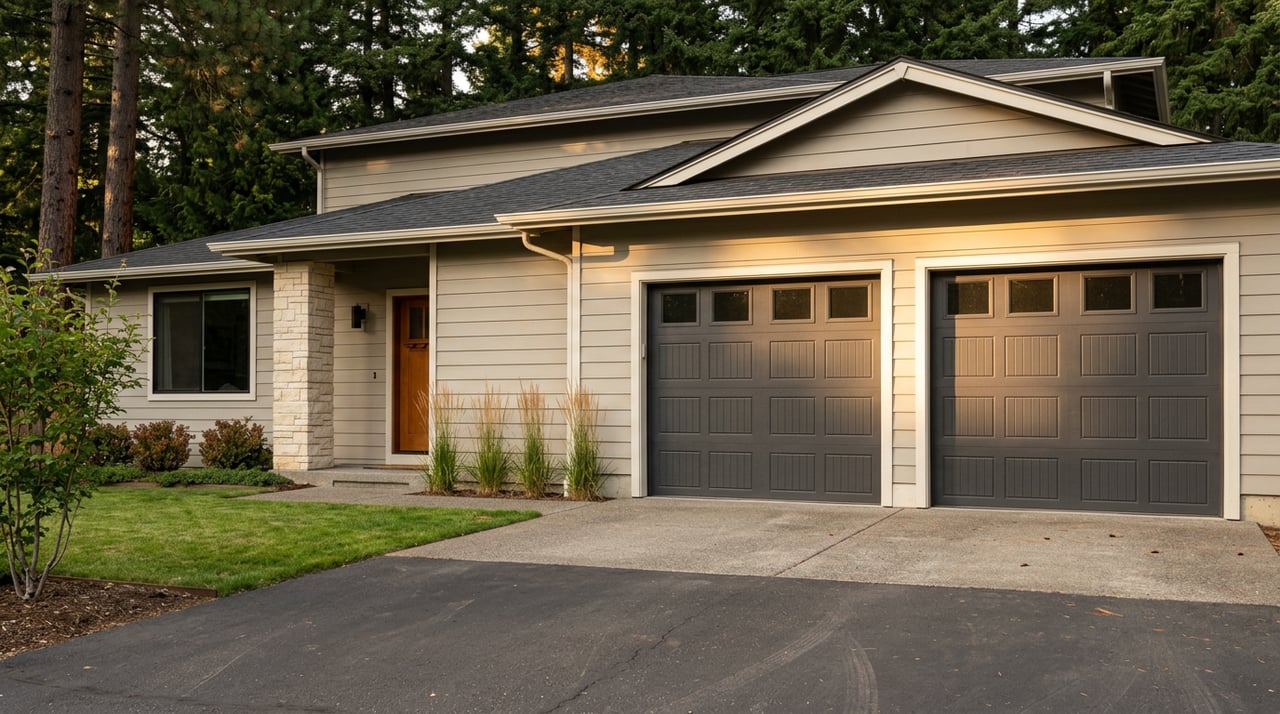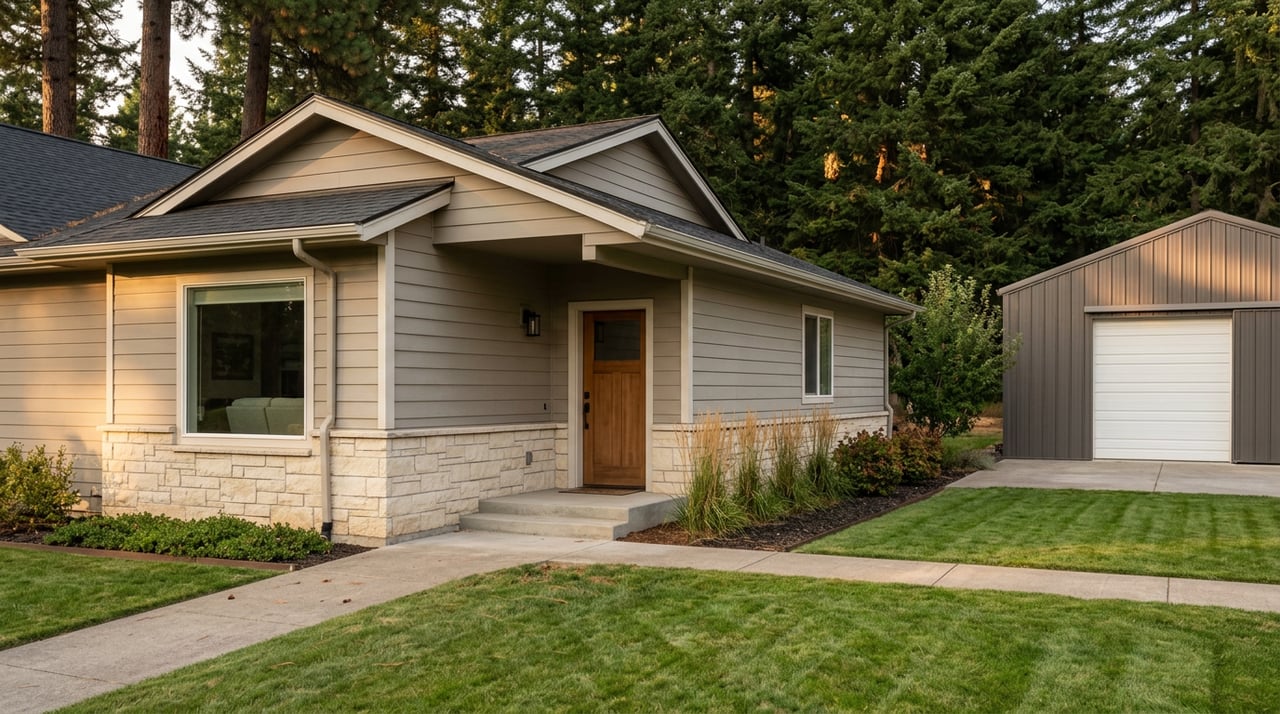
If you own a home on acreage anywhere between Havana Street and Forker Road, two things changed under your feet in the last twenty-four months, and only one of them made the news. The first was the ribbon cutting on the Bigelow Gulch Urban Connector in October 2024. The second is a Washington state rule that takes effect February 1, 2027, and it will quietly reshape how every septic-served property in Spokane County trades hands.
The thesis of this post is simple. The corridor made your property easier to sell to a Spokane Valley commuter than it has ever been. The 2027 rule means the sellers who list first, in this window, will negotiate from a much stronger position than the ones who wait until next spring. The two facts are related, and the summer of 2026 is where they intersect.
What The Finished Corridor Actually Changed For Your Buyer Pool
For most of Bigelow Gulch's life as a commuter route, the road was the story a buyer had to be talked into. The stretch between Havana and Forker carried about 10,000 cars a day on a two-lane road with a 45 mph speed limit and the ever-present feeling of a semi-truck flying by in the opposite direction. When the county broke ground in 2005, officials cited 500 accidents and at least six fatalities on the corridor since 1994. That is not a road that helps you sell a $500,000 home to a family moving out from the Valley.
That road is gone. More than 20 years ago, Spokane County set out to connect Spokane Valley and northern Spokane with a wider, safer, and quicker thoroughfare, and after years of delays, a recession, five presidential administrations, and more than a few Commission shakeups, local leaders cut the ribbon on the completed Bigelow Gulch Urban Connector in October 2024. The county split the work of straightening and widening the roadway into nine phases, completing seven of them between 2005 and 2021, and the 2024 event marked the completion of the final phase that took out one of the last remaining twists in the once-winding road. The total price tag ran to roughly $82 million.
For a seller, the practical meaning is a wider buyer pool. Commutes from the mid-corridor to I-90 near the Valley Mall are now on two lanes each way with turn lanes and 8-foot shoulders, and the psychological penalty a Valley buyer used to apply to "acreage on Bigelow Gulch" has largely evaporated. Price the home like it is still 2019 and you leave money on the table. Price it like it is a straight-shot commuter property with room for a shop and a horse, and you are pricing it to what it now is.
The road used to be the objection your listing had to survive. In 2026, it is a feature in the description.
The Rule That Quietly Reset The Timeline
Here is the transaction friction almost no one is talking about yet.
Beginning February 1, 2027, Washington state law will require on-site septic systems to be inspected by an approved Operations and Maintenance provider prior to property transfer or sale, and failure to obtain or maintain a current operational permit may delay property transfer inspections required in 2027 and after. The inspection is not a formality. Under WAC 246-272A-0270, the Spokane Regional Health District requires owners of onsite sewage systems, including holding tanks, to obtain operational permits and submit inspection records annually or every three years, because a malfunctioning system has the potential to contaminate the water supplies Spokane County residents drink by allowing untreated sewage to enter the groundwater.
Most Bigelow Gulch parcels are on septic. Many of those systems have not been formally evaluated since installation. When February 2027 arrives, every seller in Spokane County with a septic system will be trying to book the same short list of approved O&M providers, on the same clock, before their closing dates. Anyone whose drainfield turns up a deficiency will be trying to schedule a repair contractor at the same moment.
Under existing SRHD rules, any observed deficiencies must be corrected, and certain repairs require a permit from SRHD prior to construction. Permits take time. Contractors take longer. A drainfield replacement on an acreage lot is not a two-week job.
The sellers who list in the second half of 2026, with a current O&M inspection already on file and any deficiencies already remediated, will be closing before that queue forms. The sellers who wait until spring 2027 will be competing for the same inspectors, the same excavators, and the same buyer patience.
Why Summer 2026 Is The Pre-Listing Window That Actually Matters
If the two facts above are true, here is what actually changes in your prep schedule this summer. Sequence matters more than checklist length.
- Pull your septic as-built now. SRHD keeps records; if you cannot find your original permit or drawing, request a copy before you interview agents, not after. Without an as-built, an O&M inspector has to locate the tank and drainfield the hard way, which adds cost and days.
- Book the O&M inspection while the ground is workable. Late summer and early fall in Spokane County are the honest windows. Frozen ground and snow cover push inspections into spring, which is exactly when the 2027 queue will form.
- Deal with any deficiency before you list, not during inspection response. A buyer's inspector finding a failing baffle is a price renegotiation. Your own inspector finding it in August 2026 is a scheduled repair with time to shop bids.
- Confirm well records too. SRHD inspects a portion of new water wells and all decommissioned wells in the county, and buyers on a rural loan will want a recent water quality test regardless.
- Then, and only then, price the property. A listing that opens with "septic inspected, O&M current, records on file" removes the single biggest source of contingency friction on an acreage sale in this county.
The reason to run this sequence in this order is that once you are in contract, every one of these items becomes a deadline problem instead of a preparation problem.
Pricing When The County Median And Your Micro-Market Disagree
The Spokane County numbers heading into summer look, at first glance, like a soft market. The median sale price of a home in Spokane County was $429,000 over the three months ending April 2026, down 2.2% since the same period last year, with a median price per square foot of $222, down 1.3% year over year, and homes selling after 28 days on the market compared to 19 days a year earlier. County-wide, months of supply sat at roughly 1.75 as of March 2026 against a balanced-market benchmark of 4 to 6 months, and Spokane remained a seller's market despite rising inventory.
Within that, the north side has behaved differently than the rest. North Spokane and surrounding areas like Mead, Colbert, and Chattaroy showed more noticeable price pressure heading into 2026, with median prices declining about 10% year over year and closed sales dropping, and inventory peaked during the summer and later fell largely because sellers pulled listings rather than accepted lower prices, showing a market with resistance rather than distress.
For Bigelow Gulch specifically, this means two things at once. The tighter overall inventory is on your side. The softer numbers in the north-corridor comps are the pool your appraiser will pull from. The gap between those two facts is where a hands-on pricing conversation actually earns its keep, and it is the reason a raw price-per-square-foot pulled from a portal will usually underprice an acreage property with shop space, a working well, and a corridor address that is now genuinely closer, in minutes, to the Valley Mall than it used to be.
The sellers who win in this environment do two things that sellers in easier markets can get away with skipping. They document the property's operational systems in writing before the first showing, and they price to the specific product rather than to the county median.
A Short FAQ
If my septic system passed a private inspection last year, does that count for the 2027 rule? It depends on whether the inspector was on SRHD's approved O&M provider list and whether the report was filed with the district. If it was a general home-inspection walkthrough, it almost certainly does not. Ask for the specific inspector's credentialing before you rely on the report.
Is it worth connecting to sewer instead? For most Bigelow Gulch parcels, sewer is not available. Where it is, connection is a separate cost analysis. Under Spokane County code, properties are required to connect to the sewer and abandon their septic tank within one year of being notified of sewer availability, so this is a question of geography rather than preference.
Does the completed corridor actually shorten my drive? The engineering answer is yes, both in average speed and in variance. The corridor realigns, widens, and reconstructs what had been a dangerous rural freight route that connects into a busy urban corridor at Sullivan Road and Wellesley Avenue. The lived answer, for a Valley commuter, is that the trip now feels ordinary instead of a daily gamble.
What about the North Spokane Corridor? The value of the straighter, wider Bigelow Gulch Road likely will not be fully appreciated until the North Spokane Corridor is completed and the roadway is able to connect, at which point the freight-and-commute story gets stronger, not weaker. For a seller in 2026, that is a tailwind you are pricing into, not away from.
If you are weighing a Bigelow Gulch listing before the 2027 rule reshuffles the calendar, the honest first step is a walk through your property with someone who can tell you which repairs will pay you back and which are noise. That is the conversation Kristin Vanos has with acreage sellers every week, and it starts with a free home valuation and a look at your septic and well records together. Get your free home valuation and let's map out what your summer prep list should actually look like.